✓ 78% of online donors prefer to give through a nonprofit's website.
✓ Mobile-responsive design is crucial, with over 50% of website traffic coming from mobile devices.
✓ A clear call-to-action can increase conversions by over 200%.
✓ Storytelling is 22 times more memorable than facts alone in engaging audiences.
How It Works
1
Define Your Audience & Goals
Understand who you want to reach – donors, volunteers, beneficiaries – and what actions you want them to take. This foundational step ensures your design aligns with your mission's objectives.
2
Craft Compelling Content & Story
Develop impactful narratives, high-quality images, and videos that clearly articulate your mission and show your impact. Authentic storytelling resonates deeply and builds trust with visitors.
3
Optimize for User Experience & Mobile
Design an intuitive, easy-to-navigate website that looks great and functions perfectly on all devices. A seamless user experience encourages engagement and reduces bounce rates.
4
Implement Clear Calls-to-Action & Donation Paths
Strategically place prominent, action-oriented buttons and streamline your donation process. Make it incredibly easy for supporters to contribute and get involved.
Understanding Your Nonprofit's Digital Mission
Photo: cottonbro studio / Pexels
In today's digital-first world, your nonprofit's website isn't just a brochure; it's the beating heart of your organization's online presence. It's often the first, and sometimes only, impression potential donors, volunteers, and beneficiaries will have of your cause. Therefore, understanding its pivotal role is the first and most critical of all nonprofit website design tips. A well-designed website acts as a powerful storytelling platform, a transparent financial hub, and a seamless gateway for engagement. It's where your mission comes alive, where stories of impact are shared, and where support is garnered. Without a strategic approach to your digital mission, even the most noble causes can struggle to gain traction in a crowded online landscape.
The core of your digital mission must revolve around clarity, transparency, and impact. Visitors should instantly understand what your nonprofit does, why it matters, and how they can contribute. This means moving beyond generic statements and diving deep into the specifics of your programs, the challenges you address, and the tangible outcomes you achieve. High-quality imagery and video content are not optional; they are essential tools for conveying emotion and demonstrating the real-world impact of your work. Think of your website as a living annual report, constantly updated with fresh stories, progress reports, and opportunities for involvement. It should inspire, educate, and empower visitors to become active participants in your cause, whether through donations, volunteering, or simply spreading awareness. Failing to articulate your mission clearly can lead to confusion, disengagement, and ultimately, missed opportunities for support.
Furthermore, your website must serve as a beacon of trustworthiness and accountability. Nonprofits operate on the goodwill and belief of their supporters, and a professional, well-maintained website reinforces that trust. This includes easily accessible financial statements, annual reports, and information about your leadership team. Transparency builds confidence, and confidence translates into sustained support. Your website should also clearly outline your privacy policy and how donor information is protected, addressing any potential concerns proactively. In an era where misinformation is prevalent, a nonprofit's website must stand as a credible source of truth about its operations and impact. By embracing these principles, your digital mission transcends mere information dissemination to become a powerful engine for social change and community building. Remember, your website is often the first step in a long-term relationship with your supporters, making its design and content paramount to your overall success.
Designing for Impact: User Experience (UX) and Storytelling
Photo: RDNE Stock project / Pexels
The effectiveness of your nonprofit website hinges significantly on its User Experience (UX) and its ability to tell a compelling story. Good UX isn't just about aesthetics; it's about making your site intuitive, accessible, and enjoyable for every visitor, guiding them effortlessly towards the actions you want them to take. From the moment someone lands on your homepage, they should feel a sense of purpose and ease, able to find information, learn about your cause, and make a donation without frustration. This means prioritizing clear navigation, logical content organization, and fast loading times. A cluttered or confusing interface can deter potential supporters faster than almost anything else. Think of your website as a helpful guide, anticipating user needs and providing clear pathways, whether they're looking for volunteer opportunities, impact reports, or simply want to learn more about your mission. Accessibility is also a crucial component of UX, ensuring your site is usable by individuals with disabilities, broadening your reach and demonstrating your commitment to inclusivity.
Beyond functionality, storytelling is the emotional core of your nonprofit's website. People connect with stories, not just statistics. Your website should weave narratives that highlight the human impact of your work, showcasing the individuals, communities, or environments you serve. Utilize high-quality photographs and videos that capture genuine emotion and authenticity. Feature testimonials from beneficiaries, volunteers, and donors that lend credibility and relatability to your cause. Instead of saying, “We provide clean water,” show a video of a community celebrating access to a new well, or a child drinking fresh water for the first time. These narratives transform abstract concepts into tangible, heartwarming realities that resonate deeply with visitors and inspire action. Remember, people give to people, and your stories are the bridge that connects your audience to the lives you are changing.
Integrating storytelling throughout your website means more than just a dedicated 'Our Stories' section. It means embedding narratives into your 'About Us' page, your program descriptions, and even your donation appeals. Each piece of content should contribute to the overarching story of your impact and the urgent need for your work. Use evocative language, present data in an engaging way (e.g., infographics), and update your stories regularly to show ongoing progress. A website that effectively combines seamless UX with powerful storytelling doesn't just inform; it transforms passive visitors into active advocates and loyal supporters. It builds a community around your cause, fostering a sense of shared purpose and collective impact. Prioritizing these elements ensures your website is not just seen, but felt, leaving a lasting impression that motivates engagement and generosity.
Optimizing for Conversion: Donations and Engagement
Photo: RDNE Stock project / Pexels
The ultimate goal for many nonprofits is to convert website visitors into active supporters, whether through donations, volunteer sign-ups, or newsletter subscriptions. Optimizing your website for conversion is paramount, and it goes far beyond simply having a 'Donate' button. It involves strategically designing every element to guide visitors towards taking meaningful action. First and foremost, your donation process must be frictionless. A complex, multi-step donation form is a major deterrent. Aim for a simple, secure, and mobile-friendly form that can be completed in just a few clicks. Offer various payment options (credit card, PayPal, Apple Pay) and consider pre-set donation amounts with options for recurring gifts, as recurring donors provide stable, predictable income. Transparency about how donations are used is also key; a brief statement on the donation page about the impact of a specific donation amount can significantly increase conversion rates. Make your 'Donate' button prominent, consistently placed, and visually distinct across your entire site, making it easy for inspired visitors to act immediately.
Beyond direct donations, fostering engagement is crucial for long-term support. Your website should offer multiple pathways for visitors to connect with your mission. This includes clear calls-to-action (CTAs) for signing up for newsletters, becoming a volunteer, attending events, or sharing your stories on social media. Each CTA should be specific, action-oriented, and placed strategically where visitors are most likely to be inspired to act. For example, after reading a powerful impact story, a CTA to 'Volunteer Now' or 'Share This Story' makes perfect sense. Similarly, after learning about a specific program, a link to 'Sponsor a Child' or 'Fund This Project' can be highly effective. Utilize compelling visuals and concise language for your CTAs to maximize their impact. Remember, not every visitor is ready to donate immediately, but engaging them through other means keeps your organization top-of-mind and nurtures a relationship that can lead to future financial support.
Finally, regular testing and analysis are vital for continuous conversion optimization. A/B test different donation button colors, CTA phrasing, form layouts, and even the placement of your stories. Utilize analytics tools to understand user behavior: where are visitors dropping off? Which pages are most popular? What search terms are they using? This data-driven approach allows you to make informed decisions, continually refining your website to improve its effectiveness. By focusing on a seamless donation experience, diverse engagement opportunities, and ongoing optimization, your nonprofit website can become a powerful engine for generating support and advancing your cause. The goal is to make it as easy and inspiring as possible for every visitor to become a valued part of your nonprofit community and contribute to your shared vision of impact. This holistic approach ensures your website isn't just a digital presence, but a dynamic tool for achieving your mission.
Essential Nonprofit Website Design Tips for Success
Photo: RDNE Stock project / Pexels
Creating an effective website for your nonprofit requires attention to several key design principles and strategic considerations. Here are some essential tips to ensure your site stands out and achieves its mission:
* **Mobile-First and Responsive Design:** With a significant portion of web traffic coming from mobile devices, your website *must* be fully responsive, meaning it adapts seamlessly to any screen size. A mobile-first approach ensures that the design prioritizes the mobile experience first, then scales up for larger screens. This guarantees accessibility and a positive user experience for everyone, regardless of how they access your site. Test your site rigorously on various devices to catch any display or functionality issues.
* **Clear and Consistent Branding:** Your website should be an immediate reflection of your nonprofit's brand identity. Use consistent colors, fonts, logos, and messaging that align with your organization's mission and values. This builds recognition, trust, and professionalism. A strong brand presence helps differentiate your nonprofit and makes your website memorable.
* **High-Quality Visuals:** Invest in professional photography and videography. Authentic, high-resolution images and compelling videos tell your story more powerfully than text alone. Show the faces of the people you help, the environments you protect, or the work your volunteers do. Avoid generic stock photos; real imagery resonates more deeply with visitors.
* **Intuitive Navigation:** Your website's structure should be logical and easy to understand. Use clear, concise menu labels (e.g., 'About Us,' 'Our Work,' 'Get Involved,' 'Donate'). Implement a search function for larger sites. Visitors should be able to find what they're looking for within a few clicks, reducing frustration and bounce rates.
* **Compelling Calls-to-Action (CTAs):** Every key page should have a clear, prominent CTA. Use action-oriented language like 'Donate Now,' 'Volunteer Today,' 'Sign Up for Updates,' or 'Learn More About [Program Name]'. Make them visually distinct with contrasting colors and strategic placement. Don't overwhelm users with too many CTAs; focus on the primary action for each page.
* **Story-Driven Content:** As discussed, weave compelling narratives throughout your site. Use impact stories, testimonials, and case studies to illustrate the real-world difference your nonprofit makes. Show, don't just tell. This emotional connection is vital for inspiring support.
* **Easy and Secure Donation Process:** Your donation page should be simple, secure, and require minimal steps. Ensure it's mobile-friendly and accepts various payment methods. Clearly state how donations will be used and offer options for recurring giving. Transparency builds trust and encourages giving.
* **Transparency and Accountability:** Provide easy access to financial reports, annual reports, and information about your leadership team. This demonstrates trustworthiness and accountability, which are crucial for donors and grantmakers. Showcase any awards or certifications your organization has received.
* **SEO Optimization:** Optimize your website for search engines to ensure potential supporters can find you. Use relevant keywords, create high-quality content, ensure fast loading speeds, and build a strong backlink profile. This increases your visibility and organic traffic.
* **Regular Updates and Maintenance:** A stagnant website looks neglected. Regularly update content, post news and events, and ensure all links and forms are working correctly. A well-maintained site signals an active and thriving organization. This also helps with SEO and keeps visitors coming back.
By focusing on these essential tips, your nonprofit can create a powerful digital platform that not only informs but also inspires, engages, and converts visitors into dedicated supporters for your vital cause.
Comparison
Feature
Donor-Centric Website
Basic Informational Site
Social Media Only
Direct Donation Conversion
High (Optimized forms, clear CTAs)
Medium (Basic forms, less compelling)
Low (Relies on external links)
Storytelling Capacity
Excellent (Rich media, dedicated impact sections)
Good (Limited media, text-heavy)
Fair (Short-form, ephemeral content)
Data & Analytics
Comprehensive (Google Analytics, CRM integration)
Basic (Page views, bounce rate)
Limited (Platform-specific insights)
Long-term Supporter Engagement
Strong (Email sign-ups, volunteer portals)
Moderate (Contact forms)
Weak (Dependent on algorithms)
Brand Control & Credibility
Full Control (Professional, transparent)
Moderate (Standard templates)
Limited (Platform branding, external factors)
Cost Efficiency for Reach
High ROI (Attracts targeted audience)
Medium ROI (Less targeted traffic)
Variable (Paid ads often necessary)
Mobile Responsiveness
✓
✗
✓
SEO Potential
✓
✗
✗
What Readers Say
★★★★★
"Applying these nonprofit website design tips completely transformed our online presence. Our donation conversions increased by 40% in just three months, and volunteers are signing up like never before. The focus on storytelling made a huge difference."
Sarah J. · Austin, TX
★★★★★
"The advice on mobile-first design and clear CTAs was invaluable. We redesigned our site following these guidelines, and our bounce rate dropped significantly. It's now so much easier for people to engage with our mission."
David M. · Seattle, WA
★★★★★
"As a small nonprofit, we struggled with our website. These tips helped us create a professional, trustworthy site on a budget. We've seen a noticeable increase in grant applications and individual donations since the revamp."
Maria P. · Miami, FL
★★★★★
"The article provided excellent guidance, especially on optimizing the donation process. While implementing all the tips took time and resources, the outcome has been overwhelmingly positive. Our online engagement is stronger than ever."
Jonathan K. · Denver, CO
★★★★★
"I manage communications for an environmental nonprofit. The emphasis on high-quality visuals and impact stories resonated deeply. Our new photo galleries and video testimonials are driving significantly more traffic and shares."
Emily R. · Chicago, IL
Frequently Asked Questions
What is the single most important element for a nonprofit website?
While many elements are crucial, the most important is a clear, compelling, and concise articulation of your mission and impact, supported by powerful storytelling. Visitors need to immediately understand what you do, why it matters, and the difference their support can make.
My nonprofit has a tight budget. Can we still have an effective website?
Absolutely. Many platforms like WordPress, Squarespace, or Wix offer affordable templates that can be customized. Focus on clear content, good visuals, and a streamlined donation process. Prioritize mobile responsiveness and strong calls-to-action over elaborate design features.
How often should I update my nonprofit's website content?
You should aim to update your website content regularly, ideally weekly or bi-weekly, with fresh stories, news, events, and impact reports. This keeps your site dynamic, engages returning visitors, and signals to search engines that your site is active and relevant.
What is the ideal structure for a nonprofit donation page?
An ideal donation page is simple, secure, and mobile-friendly. It should have clear suggested donation amounts, an option for recurring gifts, multiple payment methods, and a brief statement on the impact of the donation. Minimize required fields and ensure a clear 'submit' button.
How can I make my nonprofit website more trustworthy?
Increase trustworthiness by providing easy access to financial reports, annual reports, and information about your leadership and board. Display any charity ratings (e.g., GuideStar, Charity Navigator) prominently. Use professional imagery and maintain a secure site with an SSL certificate.
Who should be involved in the nonprofit website design process?
Key stakeholders should include marketing/communications staff, fundraising personnel, program managers (to provide impact stories), executive leadership, and ideally, input from volunteers and beneficiaries. This ensures the website meets diverse organizational needs and speaks to various audiences.
Is it safe to collect donations directly on my nonprofit's website?
Yes, it is safe to collect donations directly on your website, provided you use a reputable payment gateway (e.g., Stripe, PayPal, Square) and ensure your site has an SSL certificate (HTTPS). These measures encrypt data and protect donor information, maintaining their trust.
What emerging trends should nonprofits consider for their websites?
Emerging trends include personalized donor experiences, interactive impact reports (e.g., data visualizations), increased use of video storytelling, AI-powered chatbots for instant support, and integration with peer-to-peer fundraising tools. Focus on authentic engagement and transparency.
By implementing these nonprofit website design tips, your organization can create a powerful digital platform that not only communicates your mission but actively inspires, engages, and converts visitors into dedicated supporters. Start transforming your online presence today to amplify your impact and achieve your noble goals.

 Photo: cottonbro studio / Pexels
 Photo: RDNE Stock project / Pexels
 Photo: RDNE Stock project / Pexels
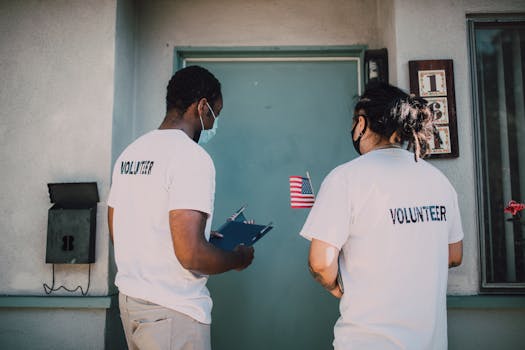 Photo: RDNE Stock project / Pexels