✓ Incorporation at the state level is the first legal step for US nonprofits.
✓ Federal 501(c)(3) status grants tax-exempt benefits and requires IRS approval.
✓ Bylaws and conflict of interest policies are crucial internal governance documents.
✓ Ongoing compliance includes annual state filings and IRS Form 990 submissions.
How It Works
1
State Incorporation & EIN
File Articles of Incorporation with your chosen state's Secretary of State. Obtain an Employer Identification Number (EIN) from the IRS, essential for tax and banking purposes.
2
Develop Governing Documents
Draft comprehensive bylaws outlining your organization's operational rules, board structure, and decision-making processes. Establish a robust conflict of interest policy.
3
Apply for 501(c)(3) Status
Prepare and submit Form 1023 (or Form 1023-EZ for smaller organizations) to the IRS. This is the critical step for federal tax-exempt status, allowing for tax-deductible donations.
4
Ongoing State & Federal Compliance
Register with state charity offices for fundraising, if required, and fulfill annual state reporting obligations. File IRS Form 990 annually to maintain federal tax-exempt status.
The Foundation: State Incorporation and Initial Setup for US Nonprofits
Photo: RDNE Stock project / Pexels
Embarking on the journey of establishing a nonprofit organization in the United States requires a meticulous approach to foundational legal steps. The very first and most critical action is state incorporation. This process legally recognizes your entity as a corporation within a specific state, granting it legal standing and the ability to conduct business, enter contracts, and hold assets. While federal tax-exempt status is often the ultimate goal, it hinges entirely on successful state incorporation. Each state has its own specific requirements, but generally, this involves filing 'Articles of Incorporation' (sometimes called a Certificate of Incorporation or similar document) with the Secretary of State or equivalent state agency. These articles typically include the organization's name, purpose, registered agent (an individual or entity designated to receive legal documents), and initial board members. Selecting a state for incorporation often depends on where your primary operations will be located, though some organizations choose states like Delaware for perceived advantages in corporate law, even if their operations are elsewhere. However, if you incorporate in one state and operate significantly in another, you'll likely need to register as a foreign corporation in the operating state.
Following state incorporation, securing an Employer Identification Number (EIN) from the Internal Revenue Service (IRS) is paramount. This nine-digit number is essentially your nonprofit's social security number. It's required for opening a bank account, filing tax returns, and applying for 501(c)(3) status. Obtaining an EIN is a straightforward process, typically completed online on the IRS website. It’s crucial to designate your organization as a nonprofit during the EIN application to ensure proper classification. Simultaneously, establishing a dedicated bank account in the nonprofit's name is essential for financial transparency and accountability, separating organizational funds from personal finances. This separation is not just good practice; it’s a legal necessity for maintaining your corporate veil and protecting board members from personal liability. Additionally, during this initial phase, it's wise to begin drafting your organization's bylaws. These internal documents will govern how your nonprofit operates, outlining the roles and responsibilities of the board of directors, meeting procedures, voting rights, and more. While not filed with the state, well-crafted bylaws are indispensable for good governance and will be required for your 501(c)(3) application. Understanding these initial nonprofit steps lays the groundwork for all subsequent compliance and operational success.
Achieving Federal Tax-Exempt Status: The 501(c)(3) Application Process
Photo: RDNE Stock project / Pexels
Once your nonprofit is incorporated at the state level and has an EIN, the next monumental step is to apply for federal tax-exempt status under Section 501(c)(3) of the Internal Revenue Code. This status is what allows your organization to receive tax-deductible contributions and often provides exemptions from certain federal and state taxes. Without 501(c)(3) status, your organization, despite being incorporated as a nonprofit, will still be treated as a taxable entity by the IRS. The cornerstone of this process is IRS Form 1023, "Application for Recognition of Exemption Under Section 501(c)(3) of the Internal Revenue Code." This is a comprehensive and often complex document that requires detailed information about your organization's purpose, activities, financial data, and governing structure. It demands a clear articulation of how your activities serve a public charitable, educational, religious, or scientific purpose, among others.
The Form 1023 application includes several critical attachments. You'll need to submit your Articles of Incorporation, bylaws, conflict of interest policy, and detailed financial statements (actual for past years, projected for future years). You must also explain your activities in detail, demonstrating how they align with 501(c)(3) purposes and that no part of your net earnings will benefit any private shareholder or individual. A significant part of the application focuses on ensuring that your organization is structured and operated exclusively for exempt purposes, and that it does not engage in substantial lobbying or political campaign activities. For smaller organizations with projected annual gross receipts of less than $50,000 for the next three years and total assets less than $250,000, there's a simplified form, Form 1023-EZ, which can significantly expedite the application process. However, eligibility for Form 1023-EZ is strict, and not all organizations qualify. Regardless of the form used, the IRS review process can take several months, during which they may request additional information. It is crucial to respond promptly and thoroughly to avoid delays. Once approved, the IRS will issue a determination letter, officially recognizing your organization's 501(c)(3) status, which is a key milestone for any charitable organization and opens doors to grant funding and public donations.
Crucial Governance and Ongoing Compliance for Sustained Nonprofit Operations
Photo: Christina Morillo / Pexels
Beyond the initial incorporation and 501(c)(3) approval, maintaining compliance is an ongoing, multifaceted responsibility that ensures your nonprofit’s longevity and integrity. Robust internal governance documents are not just initial requirements but living frameworks that guide your organization's actions. Your bylaws, for instance, should clearly define board member terms, election processes, meeting schedules, and quorum requirements. Regularly reviewing and, if necessary, amending these bylaws ensures they remain relevant to your evolving organization. A well-enforced conflict of interest policy is equally vital, preventing situations where board members or key employees could benefit personally from their positions within the nonprofit. This policy typically requires annual disclosure statements from board members and outlines procedures for managing potential conflicts, often requiring recusal from votes or discussions where a conflict exists. Developing a comprehensive record-keeping system for all legal, financial, and governance documents is also paramount. This includes meeting minutes, financial reports, donor records, and copies of all state and federal filings. Proper record-keeping is not only good practice but also essential for demonstrating compliance during audits or reviews.
On the external front, ongoing compliance involves various state and federal obligations. Federally, all 501(c)(3) organizations are required to file an annual information return with the IRS, typically Form 990, 990-EZ, or 990-N (e-Postcard) depending on their gross receipts. Failure to file for three consecutive years can lead to automatic revocation of tax-exempt status. These forms provide transparency to the public and the IRS about the organization's finances, governance, and activities. At the state level, compliance can be more varied and complex. Many states require nonprofits to register with their Attorney General’s office or Secretary of State before soliciting donations, a process often referred to as charitable solicitation registration. These requirements vary significantly by state, and many states have annual renewal obligations. Additionally, nonprofits must adhere to state-specific regulations regarding sales tax exemptions, property tax exemptions, and potentially other local permits and licenses depending on their activities and location. Understanding these diverse and continuous nonprofit legal requirements is critical to avoid penalties, maintain public trust, and ensure the organization can fulfill its mission without interruption. Engaging legal counsel specializing in nonprofit law can be invaluable in navigating this complex landscape, ensuring all deadlines are met and all regulations are properly addressed.
Common Pitfalls and Best Practices for US Nonprofit Startups
Photo: Leeloo The First / Pexels
Launching a nonprofit is a noble endeavor, but many new organizations stumble on common legal and operational pitfalls. Being aware of these can save significant time, resources, and potential legal headaches. One frequent mistake is neglecting state-specific compliance. While federal 501(c)(3) status is often the primary focus, state requirements for charitable solicitation, annual reports, and potential sales or property tax exemptions are equally important. Failing to register in states where you solicit donations, even online, can lead to fines and legal action. Another common error is inadequate financial management and oversight. Commingling funds, poor record-keeping, and a lack of clear financial policies can undermine public trust and jeopardize tax-exempt status. It's vital to have robust internal controls, regular financial reviews, and transparent reporting.
Another significant pitfall is insufficient board engagement and understanding of fiduciary duties. Board members have legal responsibilities for the organization's finances, operations, and mission. A board that is disengaged or unaware of its duties can lead to governance issues, lack of strategic direction, and even legal liability. Ensure your board receives proper orientation and ongoing education. Lastly, many startups underestimate the complexity and time investment required for the 501(c)(3) application process. Submitting an incomplete or poorly prepared Form 1023 can lead to lengthy delays or even rejection. Seeking professional guidance from an attorney or consultant experienced in nonprofit law can be a wise investment.
To navigate these challenges successfully, here are some best practices:
* **Seek Professional Advice Early:** Consult with a nonprofit attorney and accountant from the outset. Their expertise can guide you through incorporation, 501(c)(3) application, and ongoing compliance, preventing costly mistakes.
* **Develop Strong Governance:** Establish clear bylaws, conflict of interest policies, and whistleblower policies. Ensure your board is diverse, engaged, and understands its legal and ethical responsibilities.
* **Prioritize Financial Transparency:** Implement sound accounting practices, maintain separate bank accounts, and conduct regular financial reviews. Prepare for and file your IRS Form 990 accurately and on time.
* **Understand State Requirements:** Research and comply with all state-specific regulations for incorporation, charitable solicitation, and annual reporting in every state where you operate or solicit funds.
* **Educate Your Board and Staff:** Provide ongoing training on legal compliance, ethical conduct, and the specific regulations pertinent to your nonprofit's activities. This fosters a culture of compliance throughout the organization.
Adhering to these best practices will not only help your nonprofit meet its legal obligations but also build a strong, reputable, and sustainable organization capable of achieving its mission.
Comparison
Feature
Initial Setup (State Inc.)
Federal Tax Exemption (501c3)
Ongoing Compliance
Primary Authority
State Secretary of State
IRS
IRS & State Agencies
Key Document
Articles of Incorporation
Form 1023/1023-EZ
Form 990, State Annual Reports
Typical Timeline
Days to weeks
3-12 months (or more)
Annual/Bi-annual
Benefit
Legal entity status
Tax-deductible donations
Maintain legal status & trust
Cost (Filing Fees)
Varies by state ($50-$300+)
Form 1023 ($600), 1023-EZ ($275)
Varies by state ($0-$100+)
What Readers Say
★★★★★
"This guide was an absolute lifesaver for understanding the complex nonprofit legal requirements for startups US. It broke down each step, making the incorporation and 501(c)(3) process feel much more manageable. Highly recommend for any new nonprofit founder."
Sarah Chen · Austin, TX
★★★★★
"As a first-time founder, the details around state vs. federal compliance were overwhelming. This article clarified everything, especially the distinction between state incorporation and federal tax exemption. It's a comprehensive resource that I've bookmarked."
David Rodriguez · Miami, FL
★★★★★
"Following the advice in this guide, our organization successfully obtained 501(c)(3) status without any major hiccups. The section on ongoing compliance was particularly helpful in setting up our annual reporting calendar from the start. A must-read!"
Emily White · Seattle, WA
★★★★★
"The information provided was extremely thorough and accurate, although some of the legal jargon still required a quick Google search. Overall, it's an excellent starting point for anyone navigating the nonprofit legal requirements for startups in the US."
Mark Johnson · Chicago, IL
★★★★★
"Our social enterprise was transitioning to a nonprofit model, and this article perfectly outlined the legal framework we needed to follow. It demystified the 501(c)(3) application and gave us confidence in our next steps."
Jessica Lee · Denver, CO
Frequently Asked Questions
What is the very first legal step for a nonprofit startup in the US?
The very first legal step is to incorporate your organization at the state level. This involves filing Articles of Incorporation with your chosen state's Secretary of State or equivalent agency. This establishes your organization as a legal entity before you can pursue federal tax-exempt status.
Is 501(c)(3) status automatically granted once I incorporate my nonprofit?
No, 501(c)(3) status is not automatic. State incorporation makes your organization a legal entity, but you must separately apply to the IRS by submitting Form 1023 (or 1023-EZ) to be recognized as a federally tax-exempt 501(c)(3) organization. These are two distinct processes.
How do I get an Employer Identification Number (EIN) for my nonprofit?
You can obtain an EIN directly from the IRS website. It's a free, online application process where you'll provide information about your newly incorporated nonprofit. An EIN is essential for opening bank accounts, hiring employees, and filing tax returns.
What are the typical costs associated with establishing a nonprofit legally?
Costs vary but generally include state incorporation filing fees (ranging from $50-$300+), the IRS 501(c)(3) application fee ($275 for Form 1023-EZ, $600 for Form 1023), and potential legal or consulting fees if you hire professionals for assistance. Ongoing annual state filing fees also apply.
What is the difference between state and federal nonprofit legal requirements?
State legal requirements primarily cover the formation of your organization as a legal entity (incorporation) and state-specific regulations like charitable solicitation registration. Federal requirements, primarily from the IRS, concern your organization's tax-exempt status (e.g., 501(c)(3)) and related annual reporting obligations.
Who should seek professional legal advice when starting a nonprofit?
Anyone starting a nonprofit, especially those with complex missions, significant funding plans, or operations across multiple states, should strongly consider seeking professional legal advice. An attorney specializing in nonprofit law can ensure full compliance and proper structuring from the outset.
What are the risks of not complying with nonprofit legal requirements?
Non-compliance can lead to severe consequences, including fines, loss of tax-exempt status, personal liability for board members, inability to solicit donations, and damage to the organization's reputation. It's crucial for the long-term viability and credibility of your mission.
How might future trends like digital fundraising impact nonprofit compliance?
Digital fundraising increasingly blurs geographical lines, meaning nonprofits may need to comply with charitable solicitation registration requirements in multiple states where they receive donations, even if they don't have a physical presence. Future trends will likely necessitate more streamlined, universal compliance frameworks for online activities.
Understanding the intricate nonprofit legal requirements for startups in the US is the cornerstone of a successful and compliant organization. Don't leave your mission to chance – meticulously follow these guidelines and consider expert assistance to build a strong foundation for your nonprofit's impact.

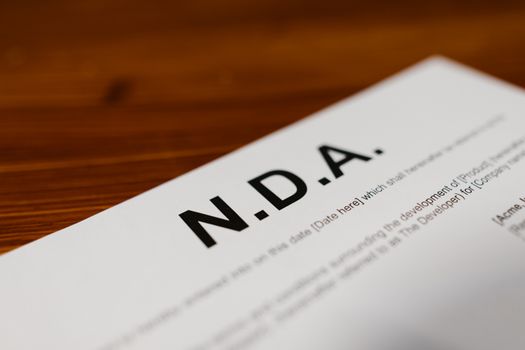 Photo: RDNE Stock project / Pexels
 Photo: RDNE Stock project / Pexels
 Photo: Christina Morillo / Pexels
 Photo: Leeloo The First / Pexels