Navigating Nonprofit Legal Services US Landscape
nonprofit legal services US

Navigating Nonprofit Legal Services US Landscape

Empower your mission with comprehensive legal support tailored for US nonprofits, ensuring compliance and impact.

Find Legal Aid Now

Key Takeaways

  • ✓ Over 1.5 million nonprofit organizations operate in the US.
  • ✓ Compliance with federal, state, and local laws is crucial for tax-exempt status.
  • ✓ Nonprofit legal services cover formation, governance, fundraising, and employment law.
  • ✓ Pro bono legal assistance is often available for qualifying organizations.

How It Works

1
Identify Your Needs

Assess specific legal challenges, such as formation, compliance, or dispute resolution. This initial self-assessment helps narrow down the type of legal expertise required.

2
Research Providers

Explore various avenues for nonprofit legal services, including specialized law firms, legal aid organizations, and pro bono programs. Look for providers with experience in tax-exempt law.

3
Consult and Evaluate

Schedule initial consultations to discuss your organization's situation and evaluate potential legal partners. Inquire about their experience, fees, and approach to nonprofit law.

4
Engage & Collaborate

Select the best legal service provider and establish clear communication channels. Work collaboratively to ensure all legal requirements are met and your mission is protected.

Understanding the Foundation: What are Nonprofit Legal Services in the US?

Elegant legal office with a close-up of golden scales of justice on a sleek dark desk. Photo: KATRIN BOLOVTSOVA / Pexels
Nonprofit legal services in the US encompass a vast and critical array of legal support tailored specifically for organizations operating under tax-exempt status, primarily 501(c)(3) entities, but also including other types like 501(c)(4)s, 501(c)(6)s, and others. These services are not merely about addressing problems when they arise; they are fundamentally about proactive compliance, strategic planning, and safeguarding the mission and assets of the organization. From the very inception, legal guidance is indispensable. This includes navigating the complex process of incorporation, drafting articles of incorporation, and securing federal and state tax-exempt status. Without proper legal counsel during formation, an organization risks procedural missteps that could delay or even jeopardize its ability to operate as a legitimate nonprofit. Beyond formation, nonprofit legal services extend into the intricate world of governance. This involves advising on board structure, responsibilities, and best practices, ensuring that the board fulfills its fiduciary duties and adheres to ethical standards. Developing robust bylaws, conflict of interest policies, and whistleblower policies are all critical components that legal experts assist with, helping to prevent internal disputes and external scrutiny. Compliance with state charity registration requirements, which can vary significantly from state to state, is another ongoing legal need. Organizations that solicit donations across state lines must understand and adhere to diverse regulations, a task made significantly easier with professional legal guidance. Furthermore, fundraising activities are heavily regulated, and legal services help nonprofits navigate these rules, ensuring compliance with federal and state solicitation laws, donor privacy regulations, and the proper acknowledgment of contributions. Employment law is another major area, covering everything from drafting employment agreements and independent contractor agreements to advising on wage and hour laws, discrimination, and wrongful termination claims. As nonprofits grow, they often face real estate transactions, intellectual property concerns (e.g., protecting their brand or program materials), and contract negotiations with vendors or partners. Each of these areas carries specific legal risks and opportunities that require specialized expertise. The landscape of nonprofit organizations is dynamic, with laws and regulations constantly evolving, making continuous legal support not just beneficial, but essential for long-term sustainability and impact.

Key Areas of Legal Support for US Nonprofits

Hands signing a contract with a blue pen, close-up view. Photo: Kindel Media / Pexels
The breadth of legal challenges and requirements facing US nonprofits necessitates a diverse range of specialized legal support. One of the most foundational areas is corporate governance. This involves ensuring the organization’s internal operations, decision-making processes, and board oversight adhere to legal standards and best practices. Attorneys help draft and review bylaws, establish clear roles and responsibilities for board members, and create policies that prevent conflicts of interest, promote transparency, and protect the organization from potential liabilities. Without sound governance, a nonprofit can quickly find itself vulnerable to internal disputes, loss of public trust, and even regulatory penalties. Tax compliance is another cornerstone of nonprofit legal services. Maintaining 501(c)(3) status (or other relevant tax-exempt classifications) requires strict adherence to IRS regulations. Legal experts guide organizations through annual reporting requirements, such as Form 990, and advise on issues like unrelated business income tax (UBIT), private inurement, and lobbying activities. Missteps in tax compliance can lead to significant penalties, loss of tax-exempt status, and severe reputational damage. Furthermore, fundraising and solicitation laws vary widely by state, and legal counsel is essential to ensure that a nonprofit can legally solicit donations across different jurisdictions, comply with disclosure requirements, and manage charitable registration processes. Employment law is a perpetually complex area for any organization, and nonprofits are no exception. Legal services in this domain cover everything from drafting employment contracts, handbooks, and independent contractor agreements to advising on wage and hour laws, discrimination, harassment, and termination procedures. Nonprofits often rely heavily on volunteers, and legal guidance is also crucial for defining the legal relationship with volunteers and mitigating associated risks. Beyond internal operations, nonprofits frequently engage in contracts with third-party vendors, partners, and grantors. Legal review of these contracts ensures favorable terms, protects the organization's interests, and minimizes potential disputes. Intellectual property, including trademarks for names and logos, and copyrights for program materials or publications, also falls under the purview of nonprofit legal services, ensuring the organization’s unique assets are protected. Finally, litigation support, while hopefully rare, is a critical service for when disputes arise, whether with employees, vendors, or other entities, requiring skilled legal representation to protect the nonprofit's interests.

Accessing Pro Bono and Affordable Nonprofit Legal Services US
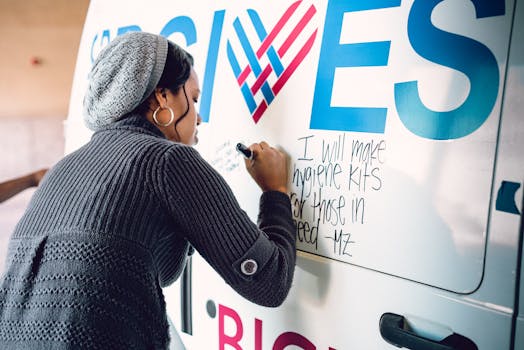
A black woman writes an inspirational note on a charity van, participating in a community event. Photo: GivingTuesday / Pexels
While essential, specialized legal services can be a significant expense for many nonprofits, especially smaller or nascent organizations with limited budgets. Fortunately, a robust ecosystem of pro bono and affordable nonprofit legal services exists across the US, designed to support these vital community assets. Pro bono legal assistance, meaning legal work undertaken voluntarily and without payment, is a cornerstone of this support system. Many large law firms, individual attorneys, and corporate legal departments dedicate a percentage of their time to pro bono work, often focusing on areas like nonprofit law. These firms understand the critical role nonprofits play in society and are willing to contribute their expertise to help them thrive. Identifying and securing pro bono support often involves leveraging networks and specific organizations dedicated to connecting nonprofits with legal volunteers. Organizations like the Pro Bono Institute, local bar associations, and specialized legal aid centers for nonprofits are excellent starting points. They often host clinics, offer referral services, or maintain directories of attorneys willing to provide pro bono assistance. For example, many cities have dedicated 'nonprofit legal assistance' programs run by local bar associations or university law clinics, which provide free or low-cost services for eligible organizations. These services can range from initial consultations and document review to full representation in certain matters, depending on the complexity and urgency of the need and the capacity of the pro bono provider. Beyond traditional pro bono, several organizations specialize in providing affordable legal services specifically to nonprofits. These might operate on a sliding scale fee structure, offer reduced rates, or provide educational resources and workshops to empower nonprofits to handle some legal matters internally. Legal clinics associated with law schools are another invaluable resource, offering supervised legal services by law students at little to no cost. These clinics often focus on areas like nonprofit formation, governance, and general compliance. When seeking pro bono or affordable services, it's crucial for nonprofits to clearly articulate their legal needs, demonstrate their mission's impact, and be prepared to provide all necessary documentation. While pro bono services are invaluable, they often come with waiting lists or eligibility criteria, making proactive engagement key. Organizations should also consider developing relationships with attorneys who specialize in nonprofit law, even if only for occasional consultations, to build a network of trusted advisors. Leveraging these resources can significantly reduce the financial burden of legal compliance, allowing nonprofits to dedicate more funds to their core mission.

Common Legal Pitfalls and How to Avoid Them for Nonprofits

Three volunteers organizing donation boxes with clothes and food items in a community center. Photo: Gustavo Fring / Pexels
Navigating the legal landscape for nonprofits in the US is fraught with potential pitfalls that can jeopardize an organization's mission, reputation, and even its tax-exempt status. Awareness and proactive measures are key to avoiding these common issues. **1. Failure to Maintain Tax-Exempt Status:** * **Pitfall:** Not filing annual Form 990s, engaging in excessive lobbying, private inurement (benefiting private individuals), or operating outside of the stated charitable purpose. The IRS can revoke tax-exempt status, leading to significant penalties and loss of donor confidence. * **Avoidance:** Work with legal counsel to ensure timely and accurate Form 990 filings. Clearly define and adhere to your mission, regularly review activities to ensure they align with your tax-exempt purpose, and have strict policies against private inurement or excessive private benefit. **2. Inadequate Governance and Board Oversight:** * **Pitfall:** Weak bylaws, inactive or unqualified board members, conflicts of interest, or lack of proper meeting minutes can lead to mismanagement, legal challenges, and scrutiny from regulators. * **Avoidance:** Establish clear, comprehensive bylaws. Recruit engaged, diverse board members who understand their fiduciary duties. Implement and enforce robust conflict of interest policies. Document all board decisions thoroughly in meeting minutes. **3. Non-Compliance with State Charity Registration Laws:** * **Pitfall:** Soliciting donations in states where the nonprofit is not properly registered can result in fines, cease-and-desist orders, and difficulty in receiving funds. * **Avoidance:** Understand where your organization solicits donations (including online). Register in all required states and maintain current registrations. Legal counsel specializing in multi-state compliance is invaluable here. **4. Employment Law Violations:** * **Pitfall:** Misclassifying employees as independent contractors, failing to comply with wage and hour laws, not having proper anti-discrimination or anti-harassment policies, or mishandling terminations can lead to costly lawsuits. * **Avoidance:** Consult with an attorney to correctly classify workers. Develop and regularly update employee handbooks. Train staff and leadership on employment law best practices. Ensure fair and documented processes for hiring, discipline, and termination. **5. Data Privacy and Cybersecurity Lapses:** * **Pitfall:** Handling sensitive donor or beneficiary data without adequate security measures can lead to data breaches, reputational damage, and legal liabilities under various state and federal privacy laws. * **Avoidance:** Implement strong data security protocols. Develop a comprehensive privacy policy. Train staff on data handling best practices. Consider cybersecurity insurance and regular security audits. By proactively addressing these common legal pitfalls with expert guidance, nonprofits can protect their assets, maintain their integrity, and ensure their resources are dedicated to fulfilling their vital missions.

Comparison

FeaturePro Bono Legal AidSpecialized Nonprofit Law FirmGeneral Corporate Law FirmLaw School Clinic
CostFree (for eligible)Hourly/RetainerHourly/RetainerLow/Free (for eligible)
Expertise LevelVaries (often high)High (specialized)Moderate (may lack nonprofit nuance)Moderate (supervised students)
AvailabilityLimited, eligibility req.High, client-drivenHigh, client-drivenLimited, eligibility req.
Scope of ServicesOften specific projectsComprehensiveBroad, may need educationOften specific projects
Relationship ContinuityProject-basedOngoing partnershipOngoing partnershipProject-based

What Readers Say

"Our small arts nonprofit struggled with state registration requirements. The pro bono legal services US program we found was a lifesaver, guiding us through every step and ensuring compliance."

Sarah Chen · Seattle, WA

"We needed help revising our bylaws and establishing clear conflict of interest policies. The attorneys specializing in nonprofit legal services US were incredibly knowledgeable and efficient, strengthening our governance significantly."

David Rodriguez · Austin, TX

"Thanks to expert nonprofit legal services, we successfully secured a complex intellectual property trademark for our educational program. This protection is vital for our future growth and ensures our unique curriculum is safe."

Maria Lopez · Chicago, IL

"While the process took a bit longer than expected, the legal team's deep understanding of nonprofit tax law was invaluable. They helped us navigate a tricky UBIT issue, saving us from potential penalties."

James O'Connell · Boston, MA

"As a new social enterprise, understanding employment law for our diverse team was overwhelming. The nonprofit legal services US firm provided clear, actionable advice, helping us draft fair contracts and policies."

Emily White · Denver, CO

Frequently Asked Questions

What is the most common legal issue faced by US nonprofits?

The most common legal issue often revolves around maintaining tax-exempt status, particularly compliance with IRS Form 990 filing requirements and avoiding activities that could jeopardize their 501(c)(3) designation, such as excessive lobbying or private inurement. State-specific charity registration and fundraising compliance also pose frequent challenges.

Are nonprofit legal services expensive?

Legal services can be costly, but many options exist to make them accessible. Pro bono programs, legal aid organizations, and law school clinics often offer free or reduced-cost services for qualifying nonprofits. Specialized nonprofit law firms may also offer tiered pricing or initial consultations to help manage costs.

How can a new nonprofit secure its 501(c)(3) status?

Securing 501(c)(3) status involves several steps: incorporating as a nonprofit corporation in your state, drafting articles of incorporation and bylaws, and then applying to the IRS using Form 1023. It's highly recommended to seek legal assistance for this complex process to ensure all requirements are met correctly and efficiently.

What are the financial implications of not complying with nonprofit legal requirements?

Non-compliance can lead to severe financial consequences, including significant fines and penalties from the IRS or state regulators, revocation of tax-exempt status (making donations no longer tax-deductible), and potential legal fees from lawsuits. It can also severely damage donor trust and an organization's reputation.

How do nonprofit legal services differ from general business legal services?

Nonprofit legal services are highly specialized, focusing on unique aspects like tax-exempt status, charitable solicitation laws, governance for public benefit, and restrictions on lobbying and political activities. While some general business principles apply, the regulatory environment for nonprofits is distinct and requires specific expertise.

Who should seek nonprofit legal services in the US?

Any organization operating or planning to operate as a nonprofit in the US should seek legal services. This includes new organizations needing formation assistance, established nonprofits requiring governance review, those dealing with complex fundraising or employment issues, or any organization facing potential litigation or regulatory scrutiny.

Is my donor data safe with nonprofit legal services?

Reputable nonprofit legal services providers understand the importance of client confidentiality and data security. They adhere to strict ethical codes and data protection standards. When engaging a firm, inquire about their data privacy policies and security measures to ensure your organization's sensitive information, including donor data, is protected.

What future trends might impact nonprofit legal services?

Future trends include increased scrutiny on executive compensation, evolving data privacy regulations (e.g., state-level privacy laws), increased emphasis on DEI (Diversity, Equity, and Inclusion) in governance, and legal challenges related to digital fundraising and cryptocurrency donations. Staying abreast of these trends will require ongoing legal guidance.

Don't let legal complexities hinder your mission. Explore the diverse landscape of nonprofit legal services in the US today to secure your organization's future, ensure compliance, and maximize your impact. Take the proactive step to protect your valuable work.

Topics: nonprofit legal services USnonprofit lawcharity legal compliancetax-exempt organizationspro bono legal aid
Leo List
Brampton weed
Adultwork EstrelaBet Vai de Bet R7 Bet Betão Galera Bet Rainbet Bet9ja Shop SportyBet BetKing Sisal Loto Foot Hollywoodbets YesPlay Odibets RushBet Jugabet BetWarrior BetCity MSport betPawa Fortebet