

Navigating Nonprofit Legal Requirements US: A Comprehensive Guide

Top view of scrabble tiles spelling 'DOCUMENTS' on various contracts and agreements.Photo: RDNE Stock project / Pexels

Navigating Nonprofit Legal Requirements US: A Comprehensive Guide

Understand the essential legal framework for US nonprofits to ensure compliance, protect your mission, and maximize impact.

Start Your Journey

Key Takeaways

  • ✓ Nonprofits must incorporate at the state level first.
  • ✓ Federal tax-exempt status (e.g., 501(c)(3)) requires IRS application.
  • ✓ Annual state and federal reporting is mandatory for compliance.
  • ✓ Maintaining public charity status involves specific operational rules and limitations.

How It Works

1
Incorporate at the State Level

Choose a state, select a legal structure (usually a corporation), and file articles of incorporation. This establishes your organization's legal existence.

2
Obtain Federal Tax-Exempt Status

Apply to the IRS for 501(c)(3) or other relevant tax-exempt status using Form 1023 or 1024. This grants federal income tax exemption and often allows tax-deductible donations.

3
Register for State-Specific Requirements

Comply with state charity registration, fundraising solicitations, sales tax exemptions, and potentially property tax exemptions. These vary significantly by state.

4
Maintain Ongoing Compliance & Governance

Fulfill annual IRS Form 990 filings, conduct regular board meetings, adhere to bylaws, and manage finances transparently. Consistent compliance is crucial for longevity.

Understanding the Foundations: State Incorporation for US Nonprofits

Tax documents with a percentage symbol on a pink and blue desk setup, emphasizing finance.Photo: Nataliya Vaitkevich / Pexels
Embarking on the journey of establishing a nonprofit organization in the United States begins not with the federal government, but with the state. This initial step, known as state incorporation, is foundational to your organization's legal existence and is a critical component of nonprofit legal requirements US. Without proper state incorporation, your group is simply an informal association, lacking the legal protections and recognition necessary to operate as a true nonprofit. Each state has its own specific statutes governing nonprofit corporations, though there are many commonalities. Typically, this involves filing 'Articles of Incorporation' (or a similar document, depending on the state) with the Secretary of State's office or equivalent agency. These articles usually specify the organization's name, its purpose, the registered agent (a designated individual or entity to receive legal documents), and the initial board of directors. The chosen state of incorporation is a strategic decision. While many organizations incorporate in the state where they primarily operate, some choose states known for more flexible nonprofit laws, such as Delaware. However, if your nonprofit operates in multiple states, you will likely need to register as a 'foreign corporation' in each of those states, adding layers of administrative complexity. The articles of incorporation should clearly state that the organization is formed for charitable, educational, religious, or scientific purposes, aligning with the criteria for federal tax exemption. It's also vital to include specific dissolution clauses, dictating that upon dissolution, assets will be distributed to another 501(c)(3) organization, rather than to private individuals. This boilerplate language is often a prerequisite for obtaining federal tax-exempt status. Beyond the articles, state law often mandates the adoption of bylaws. Bylaws are the internal operating rules of your nonprofit, outlining how decisions are made, how board members are elected, their duties, meeting frequency, and conflict of interest policies. While articles of incorporation are public documents, bylaws are internal, though they are often requested by the IRS during the 501(c)(3) application process. Developing robust and clear bylaws from the outset is crucial for good governance and helps prevent future disputes. It's also important to obtain an Employer Identification Number (EIN) from the IRS immediately after incorporation, even if you don't plan to hire employees right away. The EIN is your nonprofit's federal tax ID number, essential for opening bank accounts, filing tax-exempt applications, and all other financial and legal interactions. Navigating these initial state-level nonprofit steps correctly sets the stage for a smooth journey toward federal tax exemption and sustainable operation. Ensuring your articles and bylaws are meticulously drafted, often with legal counsel, is an investment that pays dividends in long-term compliance and stability.

Securing Federal Tax-Exempt Status: The IRS 501(c)(3) Application

Tax forms laid out with a calculator and magnifying glass on a wooden surface, perfect for finance themes.Photo: RDNE Stock project / Pexels
Once your nonprofit is legally incorporated at the state level, the next monumental step in fulfilling nonprofit legal requirements US is to apply for federal tax-exempt status with the Internal Revenue Service (IRS). The most common status sought by charitable organizations is 501(c)(3), which grants exemption from federal income tax and allows donors to deduct their contributions. This status is not automatic upon state incorporation; it requires a separate, detailed application process, primarily through IRS Form 1023. The Form 1023 is a comprehensive document that requires extensive information about your organization's purpose, activities, financial history (or projections for new organizations), governance structure, and compensation policies. It demands a clear demonstration that your organization is organized and operated exclusively for exempt purposes (charitable, educational, religious, scientific, literary, testing for public safety, fostering national or international amateur sports competition, or preventing cruelty to children or animals). Key attachments typically include your Articles of Incorporation, Bylaws, conflict of interest policy, and detailed narratives describing past, present, and planned activities. The IRS scrutinizes these applications to ensure that no part of the organization's net earnings benefits any private shareholder or individual, and that it does not engage in substantial lobbying or political campaign activities. For smaller organizations, the IRS offers Form 1023-EZ, a streamlined application. To qualify for the 1023-EZ, an organization must project gross receipts of $50,000 or less annually for the next three years and total assets of $250,000 or less. While simpler, organizations using the 1023-EZ must still meet the fundamental 501(c)(3) requirements and attest to them. Choosing between Form 1023 and 1023-EZ depends entirely on your organization's size and projected financial activity. Upon approval, the IRS will issue a determination letter, officially recognizing your organization as a 501(c)(3) public charity or private foundation. This letter is crucial for soliciting tax-deductible donations, applying for grants, and establishing credibility. The process can be lengthy, often taking several months, so it’s advisable to begin as soon as possible after state incorporation. It's also important to understand the distinction between a public charity and a private foundation. Most organizations aim for public charity status due to its broader donor base and fewer restrictions on operations. This status is generally granted to organizations that receive a substantial portion of their support from the general public or governmental units. Private foundations, conversely, are typically funded by a small number of individuals or a single family and face more stringent regulations and excise taxes. Thorough preparation and attention to detail during the 501(c)(3) application process are paramount to a successful outcome.

Ongoing Compliance & Governance: Maintaining Your Nonprofit Status
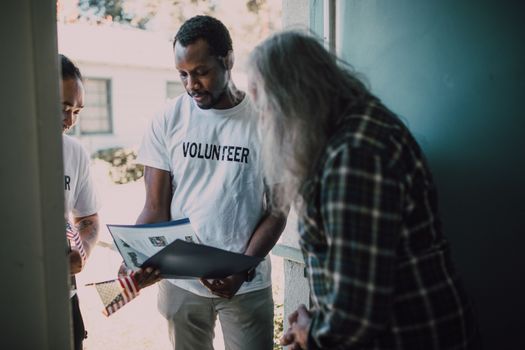
Volunteers visit a home to provide community support and discuss documents.Photo: RDNE Stock project / Pexels
Obtaining federal tax-exempt status is a significant achievement, but it marks the beginning, not the end, of your compliance journey. Ongoing nonprofit legal requirements US are extensive and critical for maintaining your organization’s tax-exempt status and public trust. The IRS, state charity regulators, and various other agencies mandate regular reporting and adherence to specific operational standards. Failure to comply can result in fines, revocation of tax-exempt status, and damage to your organization's reputation. The cornerstone of federal ongoing compliance is the annual filing of Form 990, the 'Return of Organization Exempt From Income Tax.' The specific version of Form 990 (990-N, 990-EZ, 990, or 990-PF) depends on your organization's gross receipts and assets. Small organizations with gross receipts typically less than $50,000 can file the simpler 990-N (e-Postcard). Larger organizations face increasingly complex filing requirements. Form 990 provides the IRS and the public with detailed information about your organization's finances, governance, programs, and compensation of key personnel. It promotes transparency and accountability, which are vital for public charities. Consistent and accurate filing of Form 990 is non-negotiable; three consecutive years of non-filing will result in automatic revocation of your 501(c)(3) status. Beyond federal requirements, state-level compliance is equally diverse and demanding. Most states require annual charitable solicitation registrations if your organization solicits donations from their residents. These registrations often involve submitting financial reports and copies of your IRS Form 990. Additionally, states may have their own annual corporate filings, sales tax exemptions, property tax exemptions, and even specific requirements for professional fundraisers. For instance, if your nonprofit operates across multiple states, you will likely need to register in each state where you solicit funds, file annual reports, and perhaps register as a foreign corporation. This patchwork of state regulations means careful research and monitoring are essential. Utilizing compliance software or engaging legal counsel specialized in nonprofit law can be invaluable. Good governance practices are also intertwined with legal compliance. Maintaining an active, engaged, and diverse board of directors is crucial. Regular board meetings, adherence to bylaws, transparent financial management, and robust conflict of interest policies are not just best practices; they are often implicit or explicit requirements for maintaining public charity status. Directors have fiduciary duties of care, loyalty, and obedience, meaning they must act in the best interest of the organization, avoid conflicts, and ensure the organization adheres to its stated mission and legal obligations. Proper record-keeping, including meeting minutes, financial statements, and donor records, is also vital for both internal management and external audits or inquiries. Neglecting any of these ongoing compliance and governance aspects can jeopardize your nonprofit's ability to operate and fulfill its mission.

Common Pitfalls and Best Practices in Nonprofit Compliance

Focused volunteer in gloves sorting donation supplies in a community center.Photo: Gustavo Fring / Pexels
Even with the best intentions, navigating the intricate landscape of nonprofit legal requirements US can lead to common pitfalls. Awareness of these traps and implementing best practices can save your organization significant time, money, and potential legal headaches. Avoiding these mistakes is just as important as understanding the requirements themselves. **Common Pitfalls:** * **Failure to File Annual Reports (IRS Form 990):** This is perhaps the most critical oversight. As mentioned, three consecutive years of non-filing result in automatic revocation of 501(c)(3) status, a difficult and costly process to reverse. * **Neglecting State Charity Registrations:** Many nonprofits only focus on federal compliance, unaware that most states require separate registrations to solicit funds from their residents. This can lead to cease-and-desist orders or fines. * **Inadequate Record Keeping:** Poor financial records, missing board minutes, or incomplete donor information can hinder IRS audits, state inquiries, and grant applications. * **Operating Outside of Stated Exempt Purpose:** Engaging in activities that deviate significantly from the charitable purposes outlined in your articles of incorporation and 501(c)(3) application can jeopardize your tax-exempt status. * **Private Inurement/Benefit:** Allowing board members, officers, or their families to personally benefit from the organization's assets or activities (e.g., excessive compensation, non-arm's length transactions) is strictly prohibited and can lead to severe penalties. * **Excessive Lobbying or Political Campaigning:** While some lobbying is permissible for 501(c)(3) organizations, substantial lobbying or any involvement in political campaigns (supporting or opposing candidates) is strictly forbidden. * **Lack of Conflict of Interest Policy:** Without a clear policy and process for managing potential conflicts, decisions can be perceived as self-serving, inviting scrutiny. **Best Practices for Robust Compliance:** * **Dedicated Compliance Officer/Team:** Assign responsibility for overseeing compliance to a specific individual or committee, ensuring deadlines are tracked and requirements met. * **Regular Board Education:** Educate your board members annually on their fiduciary duties, conflict of interest policies, and key compliance obligations. * **Utilize Professional Advisors:** Engage experienced nonprofit attorneys and accountants. Their expertise can be invaluable in navigating complex regulations and ensuring proper filings. * **Implement Strong Internal Controls:** Establish clear financial policies, segregation of duties, and regular internal audits to prevent fraud and ensure accuracy. * **Maintain Comprehensive Records:** Keep organized, accessible records of all financial transactions, board meetings, donor communications, and legal documents. * **Review Bylaws & Policies Annually:** Ensure your governing documents and operational policies remain current and reflective of your organization's activities. * **Stay Informed:** Regularly check IRS and state charity regulator websites for updates to laws and regulations affecting nonprofits. * **Transparency:** Operate with a high degree of transparency. Make your Form 990 and other public documents easily accessible, fostering trust with donors and the public. By proactively addressing these areas, nonprofits can build a strong foundation of compliance, allowing them to focus more effectively on their mission and impact.

Comparison

Feature501(c)(3) Public Charity501(c)(4) Social Welfare Org501(c)(6) Business LeagueFor-Profit Entity
Primary PurposeCharitable, educational, religiousSocial welfare, community bettermentBusiness promotion, common interestsProfit generation for owners
Tax-Deductible Donations✓ (for donors)✗ (generally)✗ (generally)
Lobbying LimitsLimited (insubstantial part)Unlimited (primary activity)Unlimited (primary activity)Unlimited
Political Campaign Intervention✗ (prohibited)✓ (primary activity limited)✓ (primary activity limited)
IRS Annual FilingForm 990 seriesForm 990 seriesForm 990 seriesCorporate tax returns
Private Inurement✗ (prohibited)✗ (prohibited)✗ (prohibited)✓ (profit distribution)

What Our Readers Say

5 ★★★★★

"This guide was a lifesaver for understanding nonprofit legal requirements US. It clearly laid out the steps for state incorporation and the 501(c)(3) application, which felt overwhelming before. Highly recommend for any new nonprofit leader."

5 ★★★★★

"As a small nonprofit, staying compliant with all the US legal requirements is a constant challenge. This article's section on ongoing compliance and common pitfalls helped us identify areas where we needed to improve our internal processes."

5 ★★★★★

"We successfully obtained our 501(c)(3) status last year, largely thanks to the clear roadmap provided here regarding nonprofit legal requirements US. The advice on bylaws and governance was particularly valuable in structuring our board."

4 ★★★★☆

"A very thorough overview of nonprofit legal requirements in the US. While comprehensive, I found some of the state-specific nuances still require deep dives, but this article gives an excellent starting point for those further investigations."

5 ★★★★★

"The comparison table was incredibly useful for understanding the differences between various tax-exempt statuses. It clarified why 501(c)(3) was the best fit for our educational mission and the specific nonprofit legal requirements US that came with it."

Frequently Asked Questions

What is the very first legal step to start a nonprofit in the US?
The very first legal step is to incorporate your nonprofit at the state level. This involves filing Articles of Incorporation with your chosen state's Secretary of State or equivalent office, establishing your organization as a legal entity before pursuing federal tax-exempt status.
Do all nonprofits automatically get 501(c)(3) status?
No, 501(c)(3) status is not automatic. After state incorporation, your organization must apply separately to the IRS using Form 1023 (or 1023-EZ for smaller organizations) to be recognized as a federal tax-exempt public charity or private foundation.
How do I ensure my nonprofit remains compliant annually?
To ensure annual compliance, file your IRS Form 990 (or 990-N/990-EZ) on time, renew state charitable solicitation registrations, maintain accurate financial records, hold regular board meetings as per your bylaws, and adhere to all state and federal regulations relevant to your activities.
What are the costs associated with meeting nonprofit legal requirements US?
Costs vary. State incorporation fees range from $25-$200. The IRS Form 1023 application fee is $600 (or $275 for 1023-EZ). Additionally, consider costs for legal counsel, accounting services, annual state registration fees, and potentially registered agent services.
Is a nonprofit allowed to engage in lobbying activities?
501(c)(3) public charities are permitted to engage in an 'insubstantial' amount of lobbying, but cannot participate in political campaigns for or against candidates. Other tax-exempt organizations, like 501(c)(4)s, have more leeway in lobbying and political activities.
Who should be most concerned with nonprofit legal requirements US?
All individuals involved in a nonprofit organization, especially founders, board members, and executive staff, should be concerned with nonprofit legal requirements US. They bear fiduciary duties and legal responsibilities for ensuring the organization's compliance and ethical operation.
What happens if a nonprofit fails to meet its legal obligations?
Failure to meet legal obligations can lead to severe consequences, including fines, penalties, revocation of tax-exempt status by the IRS, loss of state charitable registration, and potential personal liability for board members. This can cripple an organization's ability to operate and fulfill its mission.
How might future regulations impact nonprofit legal requirements in the US?
Future regulations might increase transparency requirements, particularly around donor-advised funds or executive compensation. There could also be changes in lobbying rules or increased scrutiny on how nonprofits use digital platforms for fundraising. Staying informed through legal counsel and nonprofit associations is key.

Navigating the complex landscape of nonprofit legal requirements in the US is essential for the longevity and impact of your mission. By understanding and diligently adhering to these guidelines, your organization can focus on making a difference, secure in its compliance. Don't let legal complexities deter your passion; equip yourself with knowledge and professional support to build a resilient and effective nonprofit.

Topics: nonprofit legal requirements USnonprofit compliance501(c)(3) statusnonprofit governanceIRS regulations for nonprofits
Leo List
Brampton weed
Adultwork